


How to Mold-Proof Your Bathroom on a Budget
How to prevent mold in the bathroom starts with understanding why this space is such a hotspot: c...


In 2026, the bathroom is evolving from a purely functional space into a true SPA-like relaxation zone for self-care. According to the NKBA 2026 Bath Trends Report, 72% of designers note that homeowners are expanding bathroom sizes to accommodate wellness-focused features, while 77% say hotel and spa experiences are a key source of inspiration. Modern designs are now intended to enhance the overall experience of being in the bathroom. That’s why they often combine thoughtful technology with natural materials, while also placing a strong emphasis on health and well-being. In this article, we explore the rise of wellness bathrooms, the most popular features shaping this trend, and the tangible benefits they bring to modern living — from better sleep and reduced stress to a deeper sense of everyday luxury and restoration.
A wellness bathroom represents a clear move beyond traditional bathroom design. Today, this space is reimagined as an integral part of a home’s well-being ecosystem. It’s less about fitting fixtures into a layout and more about shaping an environment that supports daily rituals of care and resetting.
This shift is also physical. Many homeowners are expanding their bathrooms to accommodate features that promote relaxation and recovery, enabling more intentional layouts. Instead of a single compact zone, the space is often divided into distinct areas, such as a soaking tub near a window, a walk-in shower designed for comfort, or even a quiet corner for steam or heat therapy.
As interior designer Maya Lindström puts it, “Space is no longer a luxury in the bathroom—it’s a tool. It gives people the freedom to breathe, pause, and actually experience the moment.”
At the same time, wellness is becoming more subtle and integrated. Rather than relying only on visible features like saunas or cold plunges, designers are embedding well-being into the atmosphere itself. Lighting that follows circadian rhythms, natural textures, soft acoustics, and even scent all contribute to a space that feels restorative on multiple levels.
As architectural consultant Daniel Reeves says, “The most successful wellness interiors don’t announce themselves. They work quietly in the background, supporting both the body and the mind.”
Designers are now recommending concepts that seamlessly blend natural textures, tactile comfort, and quiet luxury to craft a space that truly feels restorative for both body and mind. Below are the key spa-like bathroom design concepts to incorporate this year.
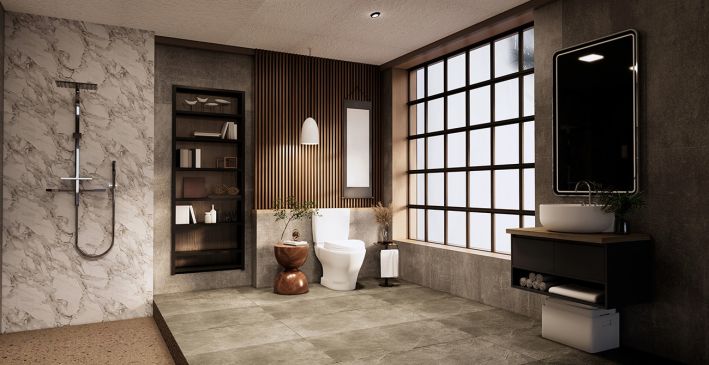 One of the defining features of wellness bathrooms in 2026 is the return to raw, natural materials that bring warmth, tactility, and organic beauty.
Designers are moving away from the cold, clinical look of glossy white tiles and chrome, embracing instead textured surfaces such as fluted limestone, ribbed ceramics, microcement, and naturally textured stone. Particularly popular are tiles inspired by limestone and travertine, which add softness, tactile warmth, and a handcrafted feel.
These materials pair beautifully with the year’s organic color palette, sage green, olive, terracotta, and soft, muted earth tones, enhancing a tranquil atmosphere.
Designers also suggest creating striking accent panels with textured stone tiles on the walls, contrasted with smooth matte tiles in the same tonal range for an elegant, layered effect.
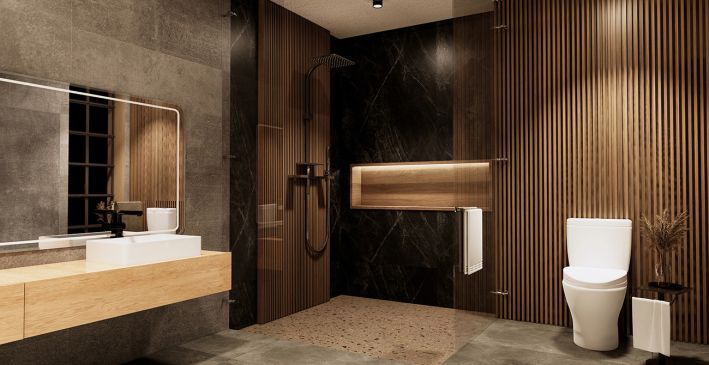 The modern wellness space design is moving away from icy tones in favor of a spectrum that embraces welcoming warmth with buttery creams, sandy beiges, and soft, muted ochres.
According to Lidia Saab, an interior design expert, materials like travertine are emerging as the new essentials, bringing a unique natural variation.
“These stones offer a unique ability to add warmth, texture and natural variation to a bathroom unlike the polished marbles and bright white surfaces that have defined bathrooms for decades,” she notes.
By layering desert-inspired hues, designers create a visual envelope that feels protective and calm. It’s a color strategy designed to soften the edges of daily life.
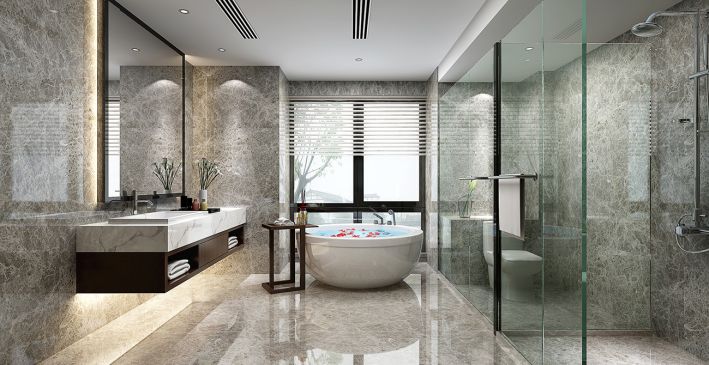 This year we see a move from visual noise to infinite surfaces. By extending large-format slabs from the floor onto the walls, designers are creating a striking optical illusion: the bathroom no longer feels like a collection of parts, but rather a space carved from a solid block of stone.
In smaller bathrooms, eliminating the grid of grout lines pushes the walls outward and grant a sense of scale where it was previously lacking. Using ultra-thin slabs makes this seamless finish both practical and durable without compromising structural integrity.
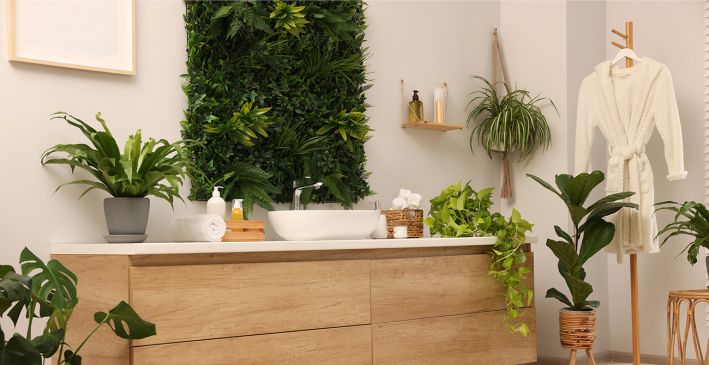 Biophilic design is about creating a living ecosystem within the bathroom, where greenery acts as a structural element that blurs the line between the interior and the natural world outside.
By transforming the bathroom into a private oasis, the presence of living flora and organic light helps lower stress levels and offers a grounding connection to the outdoors.
“There’s so much room for experimentation within biophilic design that creates a calming and relaxing bathroom space; we don’t think we’re yet at its peak in popularity,” says Katie Cope, Head of Showerwall, highlighting that this trend has become a cornerstone of modern wellness.
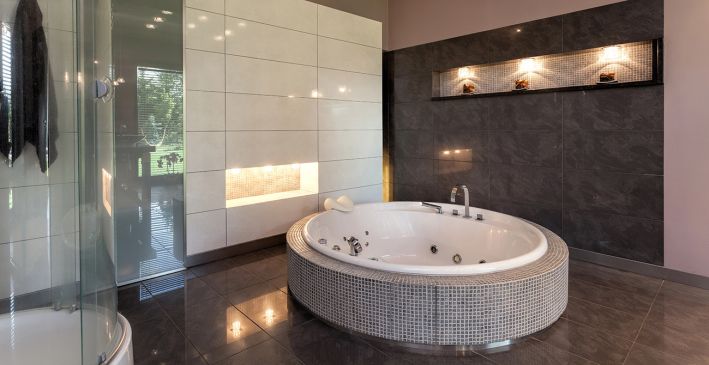 Steam, heat, cold water, red light — the modern bathroom reads more like a treatment menu than a floor plan.
Kohler, Hansgrohe, and Dornbracht lead a wave of hydrotherapy fixtures bringing spa-like experiences to home bathrooms.
Freestanding soaking tubs from Hydro Systems now incorporate Thermal Air bubble massage, chromatherapy lighting, and aromatherapy infusion systems. This way, they turn a simple bath into a full sensory ritual that supports circulation, eases muscle tension, and restores mental calm after a long day.
"The bathroom has evolved from a purely functional room into a personal sanctuary," notes wellness design consultant Claire Renaud. "People are no longer willing to wait for a weekend retreat to feel restored — they want that experience every single morning."
Steam showers with Mr. Steam systems provide enveloping heat that opens pores, stimulates lymph flow, and calms the nervous system. GRAFF’s thermostatic showers offer programmable settings for temperature, pressure, and spray, smoothing the daily routine.
In addition to heat-based therapies, innovations like HigherDose's red light shower filter merge dual red and near-infrared wavelengths with multi-stage water purification to strip chlorine, heavy metals, and microplastics from the water stream while promoting skin radiance.
Cold plunge units are also finding a natural home within the bathroom footprint, with compact models designed to integrate beside walk-in showers for seamless contrast therapy.
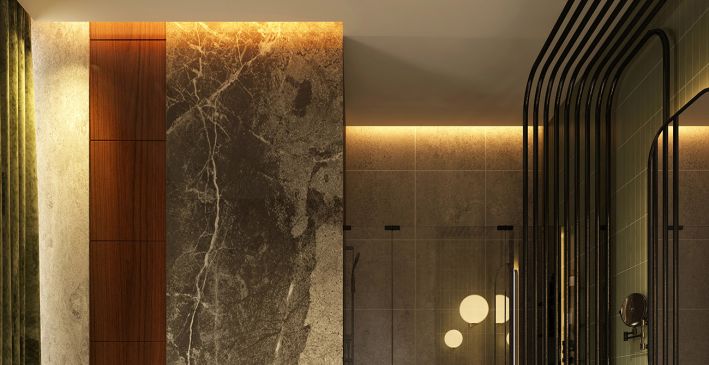 Lighting in the modern bathroom is no longer a single overhead decision, but a layered system, calibrated to shift with the time of day and the intention behind each visit.
The technical backbone of this shift lies in color temperature. The 2700K–3000K range has become the consensus sweet spot for wellness-oriented bathrooms: warm enough to feel genuinely relaxing, yet accurate enough to render skin tones and surfaces with clarity. At 2700K, the light reads almost like candlelight — low-stimulation, nervous-system-friendly, appropriate for an evening soak. Push toward 3000K and the same room becomes ready for a morning routine without ever feeling harsh or clinical.
Indirect light does the heavy lifting here. LED strips recessed into ceiling coves, toe kicks, and niche shelving dissolve hard architectural edges and replace them with a continuous, sourceless glow. It is precisely this quality that spa designers have relied on for years, and residential bathrooms are finally catching up.
"The biggest mistake people make in bathroom lighting is treating it as a single layer," says lighting designer Johanna Brandt of Studio Lumen. "A spa never lights a room from one point. You need depth — a wash from behind the mirror, warmth from below, and something sculptural overhead that gives the eye a place to rest."
Sculptural luminaires are answering that last brief. Grouped pendant clusters and individual wall sconces introduce form and shadow into spaces that once had neither, making the bathroom feel considered rather than simply functional. A mirror with a diffused halo softens the face and the room simultaneously.
Redesigning a bathroom around wellbeing is an investment that returns value on multiple levels, every single day.
A bathroom built for wellness supports deeper, more restorative sleep by creating the right wind-down conditions: warm light, steam heat, and sensory calm that signal the nervous system to shift out of high-alert mode. Chronic stress finds fewer places to accumulate when a 10-minute shower becomes a genuine decompression ritual rather than a rushed obligation.
Beyond the personal, these spaces carry real financial weight. Spa-like bathrooms rank among the highest-ROI renovations in residential real estate, appealing to buyers who now treat wellness infrastructure the same way a previous generation treated a renovated kitchen.
Improved circulation, better skin, reduced muscle tension, more grounded mornings — the benefits stack quietly, without requiring a gym membership or a weekend retreat.
And the trajectory is clear: as wearables and health-tracking tools make people more attuned to the connection between environment and physical state, the demand for spaces that actively support recovery will only sharpen.

The lion's share of the house remodeling cost should go for roof restoration

Homeowners should keep a close eye on their window efficiency

Going solar should be an ultimate part of any major home renovation project

Install an advanced HVAC system to improve your home's air quality

Add to your house value by updating the look and functionality of your bathroom

Consider a kitchen remodeling to make it more welcoming and comfortable

Keep the gutter system in mint condition to prevent any damage to the integrity of your home.

Install new flooring to enhance your home's appearance and add extra value to it

Replace the exterior siding to spruce up your home's curb appeal and increase its sale value

Equip your home with a walk-in tub to enjoy improved safety while taking a bath
GET THE ESSENCE OF RELEVANT HOME
IMPROVEMENT TOPICS IN LESS THAN 5 MINUTES
How to Mold-Proof Your Bathroom on a Budget
How to prevent mold in the bathroom starts with understanding why this space is such a hotspot: c...

Most homeowners hit the same wall when they start planning a gutter project. You know your roofli...

Thanks for joining our homeowners’ community.
Stay tuned!
Choose the category
Choose the category


